
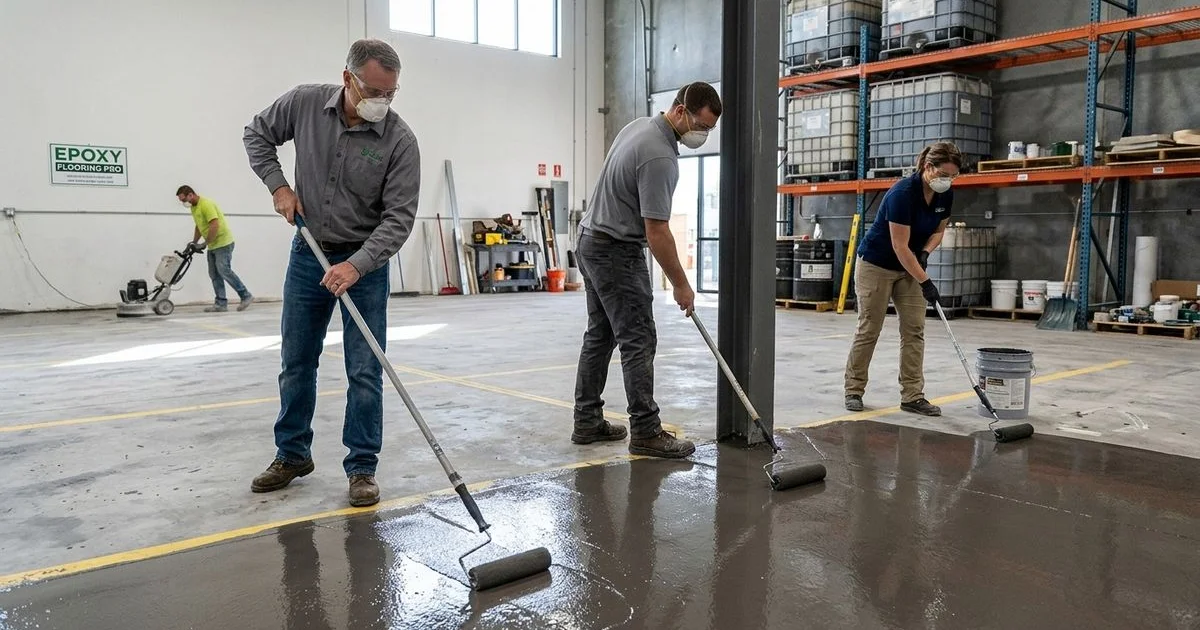
Moisture Vapor Transmission Barriers for Concrete Floors
Moisture vapor transmission barriers and remediation systems that solve Midwest freeze-thaw moisture problems before coating application.
Get a Free Estimate20+
Years Experience
50+
In-House Installers
5.0 ★
Google Rating
24/7
Operations Support
The Hidden Threat Beneath Your Concrete Floor
Moisture vapor transmission (MVT) is the leading cause of coating failure that facility managers never see coming. Water vapor migrates continuously through concrete slabs from the soil below, driven by hydrostatic pressure, temperature differentials, and capillary action. In the Midwest, our freeze-thaw cycles, high water tables, and clay soils create some of the most aggressive moisture conditions in the country. When this invisible moisture reaches a floor coating, the results are predictable and devastating: blistering, delamination, and complete coating failure.
The frustrating part is that the concrete surface can appear perfectly dry while transmitting enough moisture vapor to destroy a coating system. You cannot see it, feel it, or smell it — but it is there, and it will ruin your investment if not addressed. At Epoxy Flooring Pro, we test every project for moisture before coating and install proven vapor barrier systems when remediation is required.
Understanding Moisture Vapor Transmission
What Is MVT?
Moisture vapor transmission is the movement of water in vapor form through the pores of a concrete slab. All concrete transmits some moisture — it is a porous material by nature. The question is whether the rate of transmission exceeds the tolerance of the coating system applied on top. Most epoxy and urethane coatings can tolerate 3-5 pounds of MVT per 1,000 sq ft per 24 hours (measured by ASTM F1869). When the rate exceeds this threshold, the vapor pressure beneath the coating creates blisters, lifts the coating from the substrate, and ultimately causes delamination.
Why the Midwest Is Particularly Challenging
Several factors make Michigan and Great Lakes region concrete floors especially susceptible to moisture problems:
- High water tables — seasonal water table fluctuations push moisture through slabs
- Freeze-thaw cycling — ice lens formation in soil drives moisture toward the warm side (your slab)
- Clay soils — clay retains water and creates sustained hydrostatic pressure against foundations
- Older construction — many industrial buildings lack modern vapor retarders beneath their slabs
- Slab-on-grade construction — direct earth contact maximizes moisture exposure
Our Moisture Testing Protocol
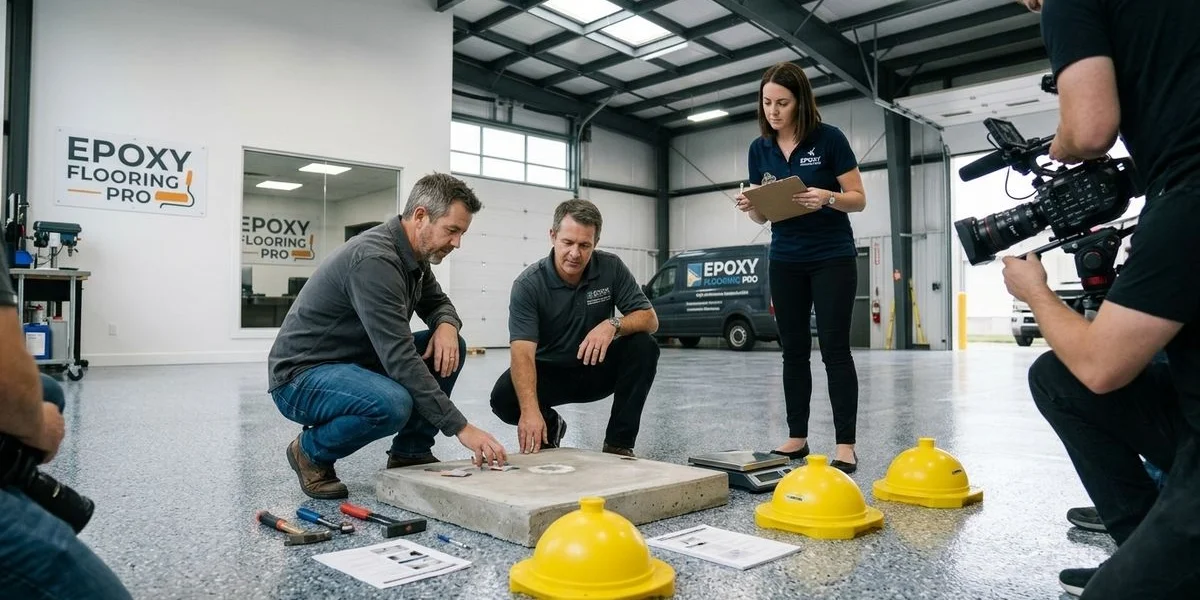
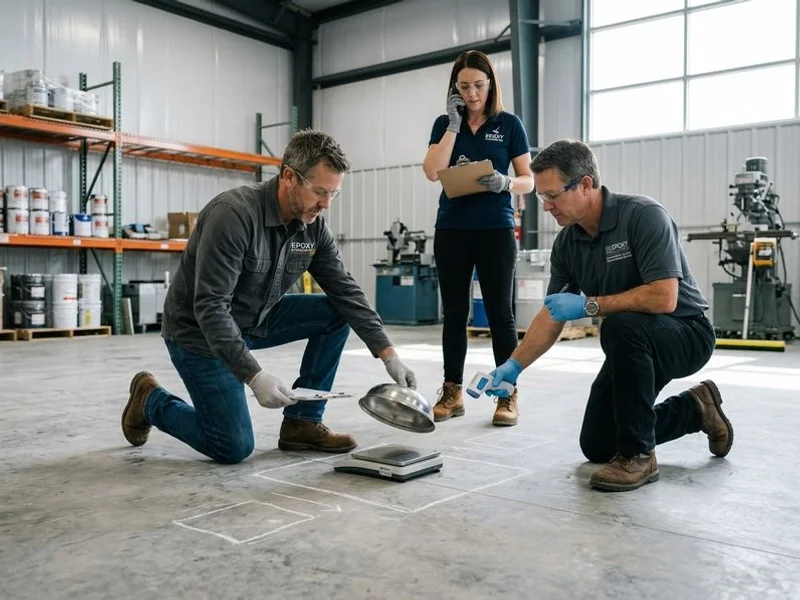
We test every project for moisture using two ASTM-standard methods. For a comprehensive overview of testing procedures and what the results mean, see our guide on moisture vapor transmission testing for concrete floors.
ASTM F1869 — Calcium Chloride Test
This quantitative test measures the actual rate of moisture vapor emission from the concrete surface. A sealed container of calcium chloride (a desiccant) is placed on the prepared concrete surface for 60-72 hours. The weight gain of the calcium chloride indicates the MVT rate in pounds per 1,000 sq ft per 24 hours. We place multiple test kits across the floor area to identify localized high-moisture zones.
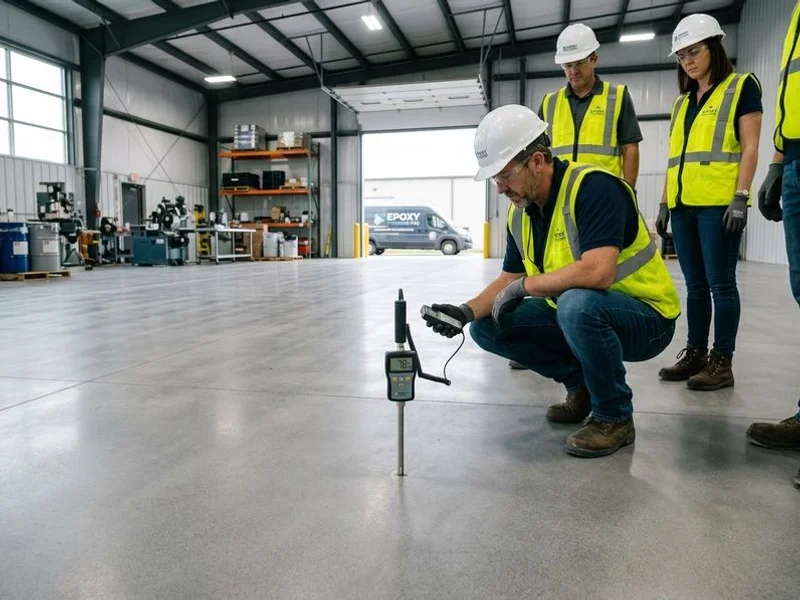
ASTM F2170 — Relative Humidity Probe
This test measures the internal relative humidity of the concrete slab at 40% of slab depth. Holes are drilled into the concrete, probes are inserted and sealed, and readings are taken after equilibration. Results above 75% RH indicate moisture conditions that will compromise most coating systems. This method is particularly useful for identifying moisture problems in thick slabs or slabs with existing coatings.
Our Moisture Vapor Barrier Systems
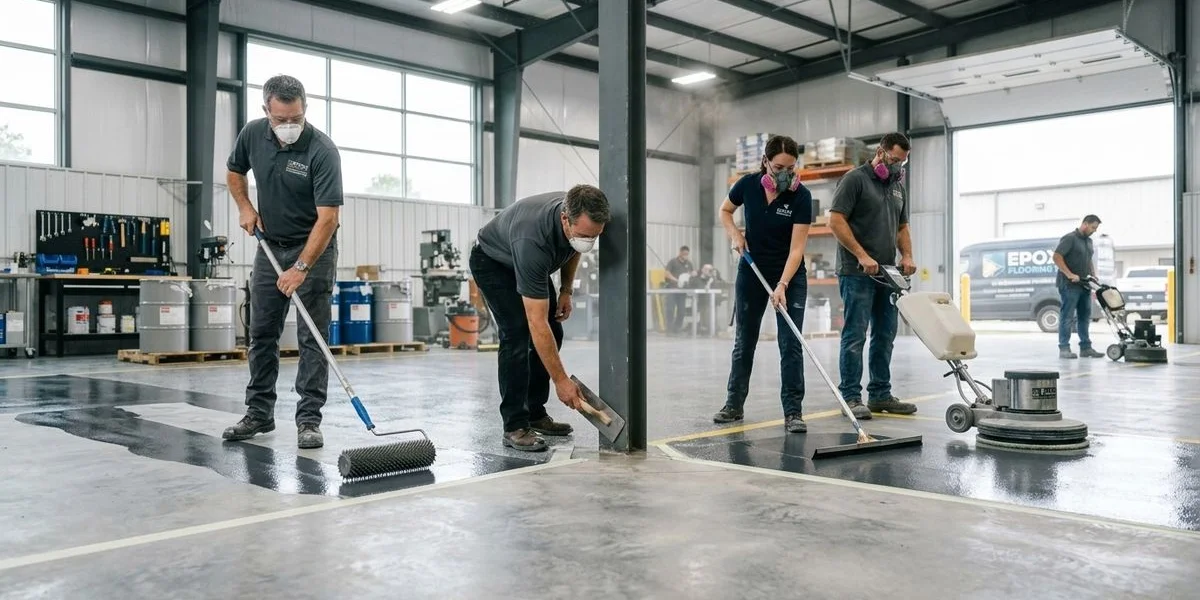
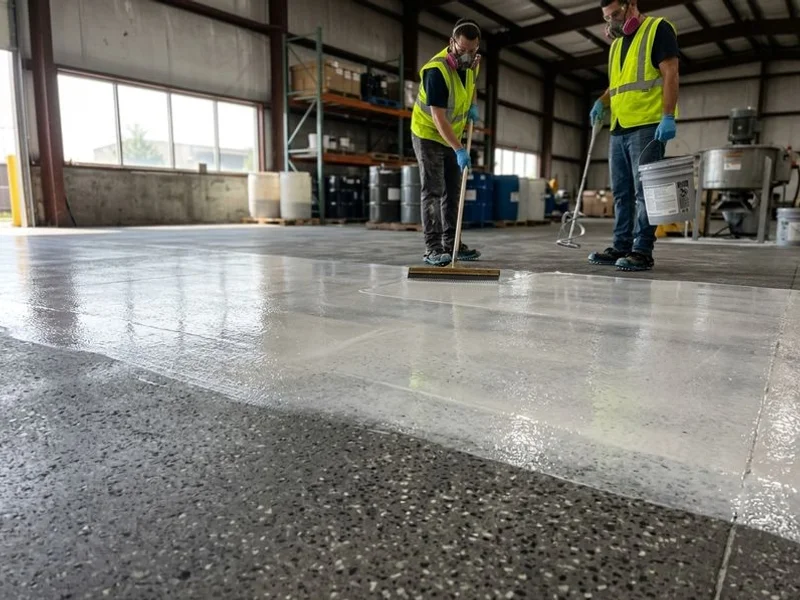
When testing reveals excessive moisture, we install dedicated vapor barrier systems designed to block moisture transmission before the finish coating is applied:
High-Build Epoxy Vapor Barriers
These systems are applied at 40-60+ mils thickness and are rated to tolerate MVT rates up to 25 pounds per 1,000 sq ft per 24 hours — far exceeding the conditions found in even the most challenging Midwest environments. The barrier creates a dense, impermeable layer that blocks moisture vapor while providing an excellent bonding surface for the topcoat system.
Cementitious Moisture Remediation
For extremely high moisture conditions or green concrete (new pours), cementitious moisture remediation systems provide a breathable barrier that manages moisture while supporting coating adhesion. These systems are applied as a thin cementitious overlay that equilibrates moisture levels within the slab.
When Do You Need a Moisture Barrier?
Not every project requires moisture remediation. Our testing determines whether a barrier is necessary. Common indicators include:
- MVT test results exceeding 3 lbs/1,000 sq ft/24 hours
- Relative humidity readings above 75% at 40% slab depth
- History of coating failures (blistering, delamination) on the slab
- No vapor retarder beneath the slab (common in pre-1990 construction)
- Visible efflorescence (white salt deposits) on concrete surfaces
- High water table or known drainage issues around the facility
The Cost of Skipping Moisture Testing
Omitting moisture testing to save a few hundred dollars is a false economy. A coating system that fails due to moisture will need to be completely removed and reinstalled — at a cost far exceeding the original project. Add in the operational downtime, production disruption, and disposal costs, and the total expense of a moisture-related failure can be three to five times the cost of the original installation.
Get Your Floor Tested
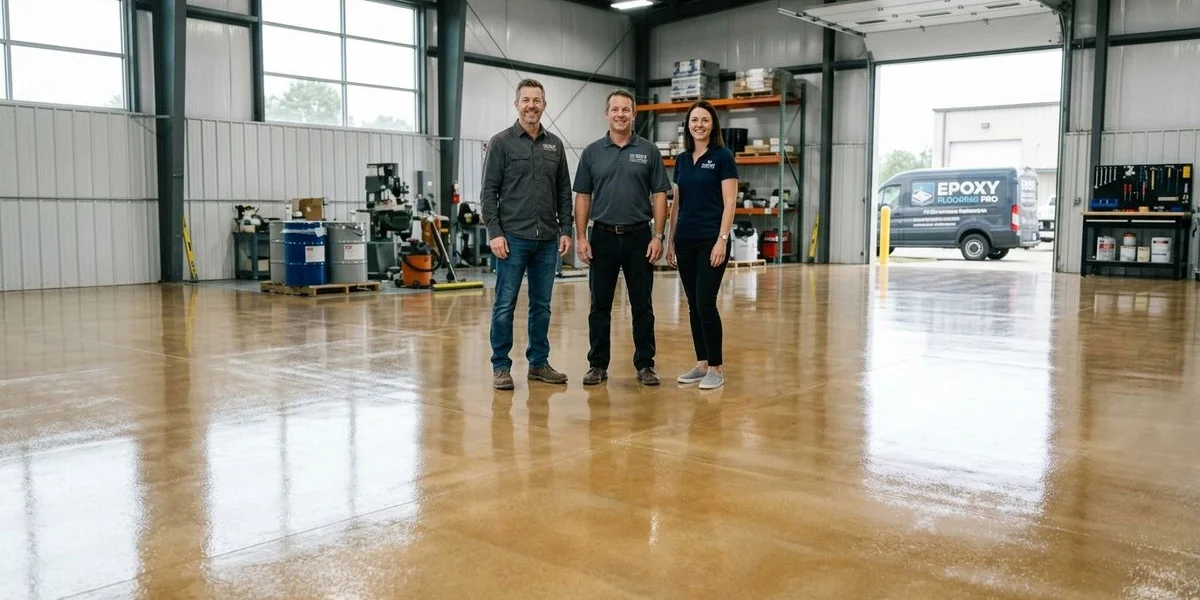
If you are planning a floor coating project — or if an existing coating is showing signs of moisture-related failure — the first step is professional moisture testing. Our team provides comprehensive testing with clear, actionable results. Contact us today for moisture testing and remediation consultation.
Project Gallery
Related Services
Concrete Surface Preparation
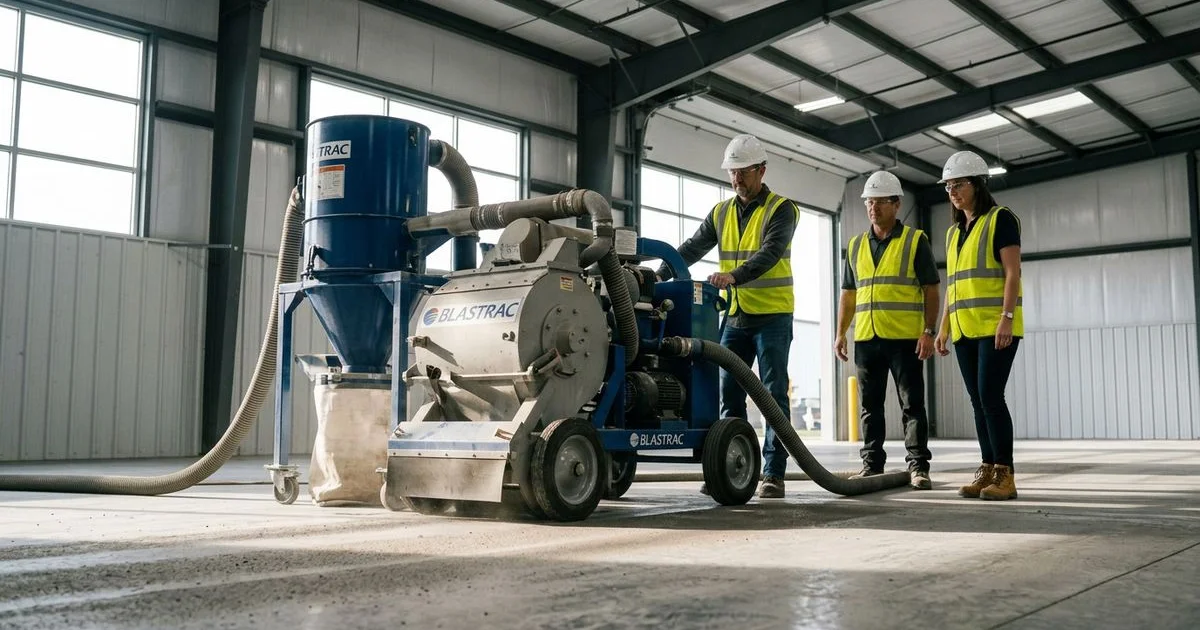
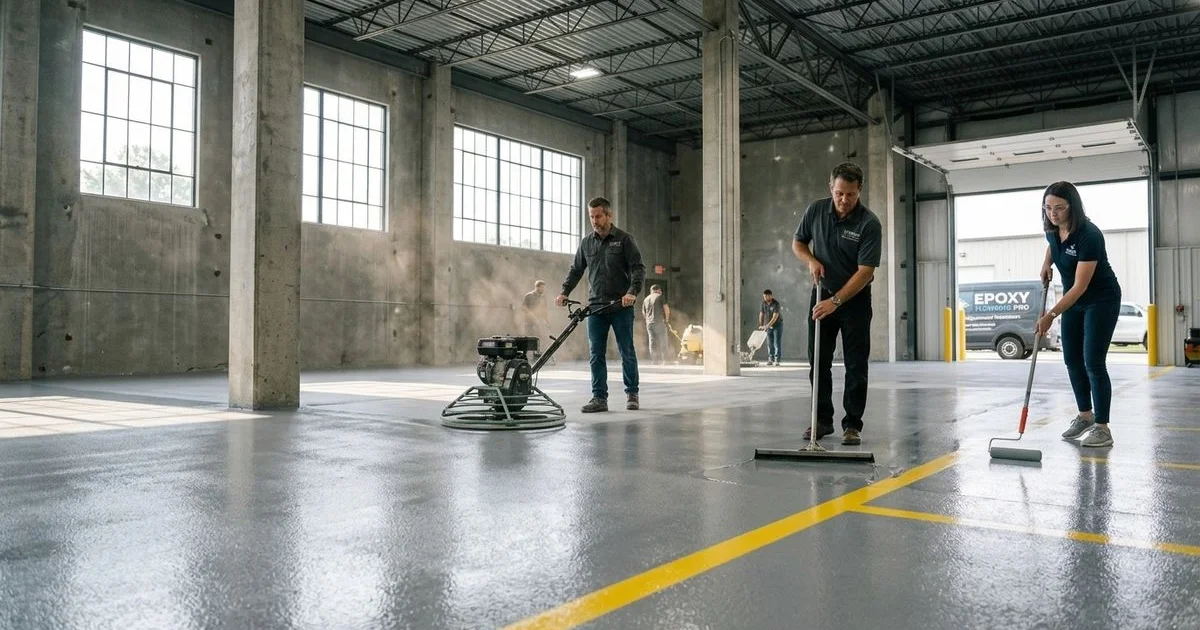
In-house concrete surface preparation including shot blasting, diamond grinding, and mastic removal — we own all equipment, ensuring zero rental delays.
Epoxy & Urethane Flooring
Industrial-grade epoxy and urethane cement floor systems engineered for heavy traffic, chemical exposure, and continuous operations.
Failing Floor Coatings
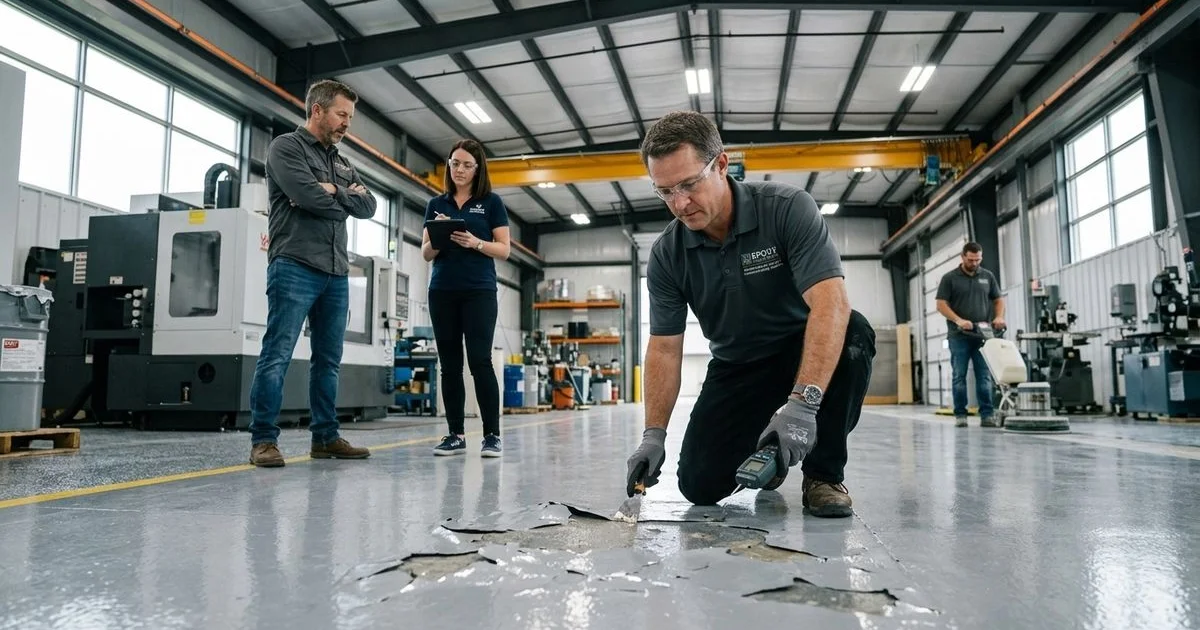
Expert diagnosis and repair of failed floor coatings — peeling, blistering, and delamination fixed with proper preparation and premium systems.
Ready to Get Started?
Contact our team for a free on-site assessment. Available 24/7 with nationwide mobilization.