
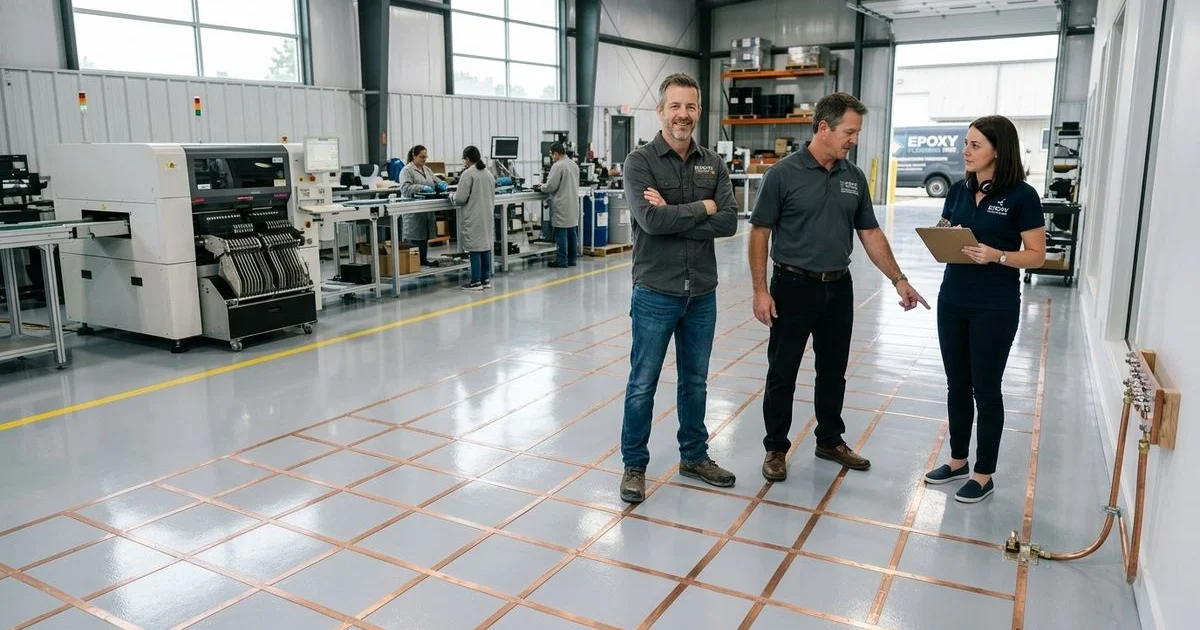
Electrostatic Dissipative & Conductive Floor Systems
Electrostatic dissipative and conductive floor coatings for environments where static discharge threatens sensitive electronics and safety.
Get a Free Estimate20+
Years Experience
50+
In-House Installers
5.0 ★
Google Rating
24/7
Operations Support
Why Static Control Flooring Is Critical
Electrostatic discharge (ESD) is an invisible threat that costs the electronics industry billions of dollars annually in damaged components, reduced yields, and latent defects. A static discharge as small as 20 volts — far below the threshold of human perception — can destroy sensitive semiconductor devices, corrupt data in storage systems, or trigger ignition in explosive atmospheres. Your floor is the largest surface area in any facility and plays a central role in your static control program.
Standard epoxy and urethane coatings are electrical insulators that generate and accumulate static charge as people walk across them. In environments where static control is critical — electronics manufacturing, data centers, aerospace assembly, ammunition handling — insulative floors are a liability. ESD and conductive flooring systems solve this problem by providing a controlled, measurable path to ground that safely dissipates static charges before they can cause damage.
Understanding ESD Floor Classifications
The Electrostatic Discharge Association (ESDA) and ANSI define two primary floor resistance classifications:
Static Dissipative (SD) Floors
- Resistance range: 1.0 x 10^6 to 1.0 x 10^9 ohms
- Application: Electronics manufacturing, assembly, testing, and repair areas
- Function: Slowly dissipates charge to ground, preventing rapid discharge events that could damage components
Conductive Floors
- Resistance range: Less than 1.0 x 10^6 ohms
- Application: Explosive environments, ammunition handling, solvent storage, operating rooms
- Function: Rapidly dissipates charge to ground, preventing any charge accumulation that could create sparks
The choice between static dissipative and conductive systems depends on your specific application and the sensitivity of the materials or processes in the space. For a deeper look at compliance standards for specific industries, read our article on ESD flooring requirements for electronics and aerospace. Our team evaluates your requirements and specifies the appropriate system.
Our ESD Installation Process
Step 1: Substrate Preparation
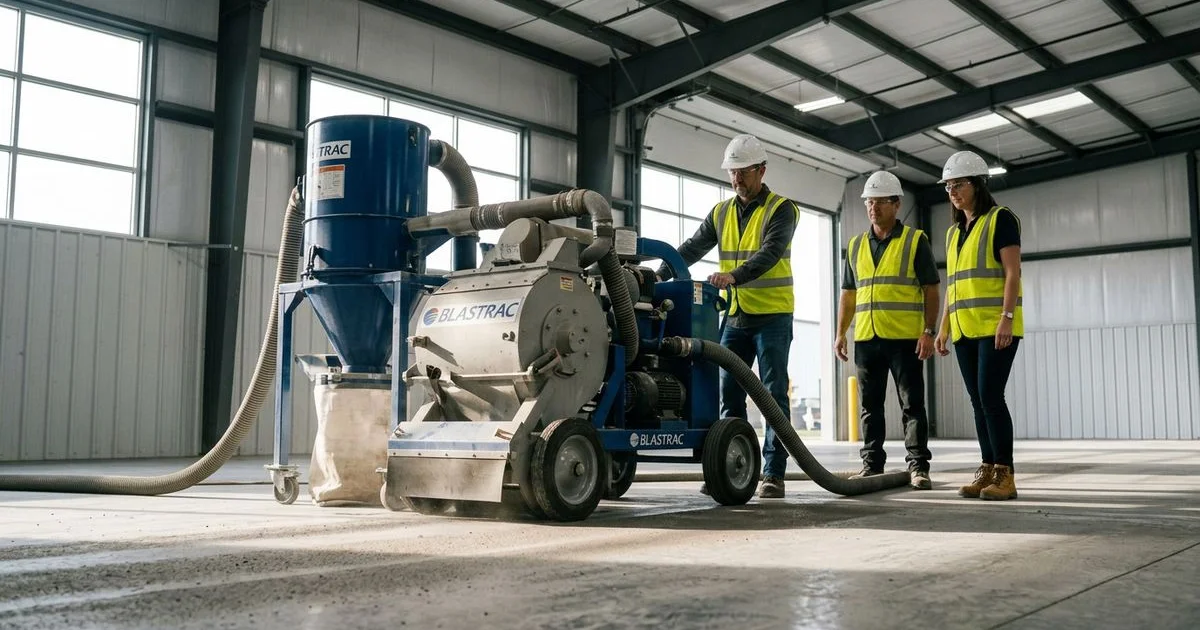
Proper concrete preparation is even more critical for ESD floors than standard coatings. The grounding system must make direct contact with the concrete substrate, and any contaminants or bond breakers will compromise both adhesion and electrical continuity. We shot blast or diamond grind to create the required profile and verify substrate cleanliness.
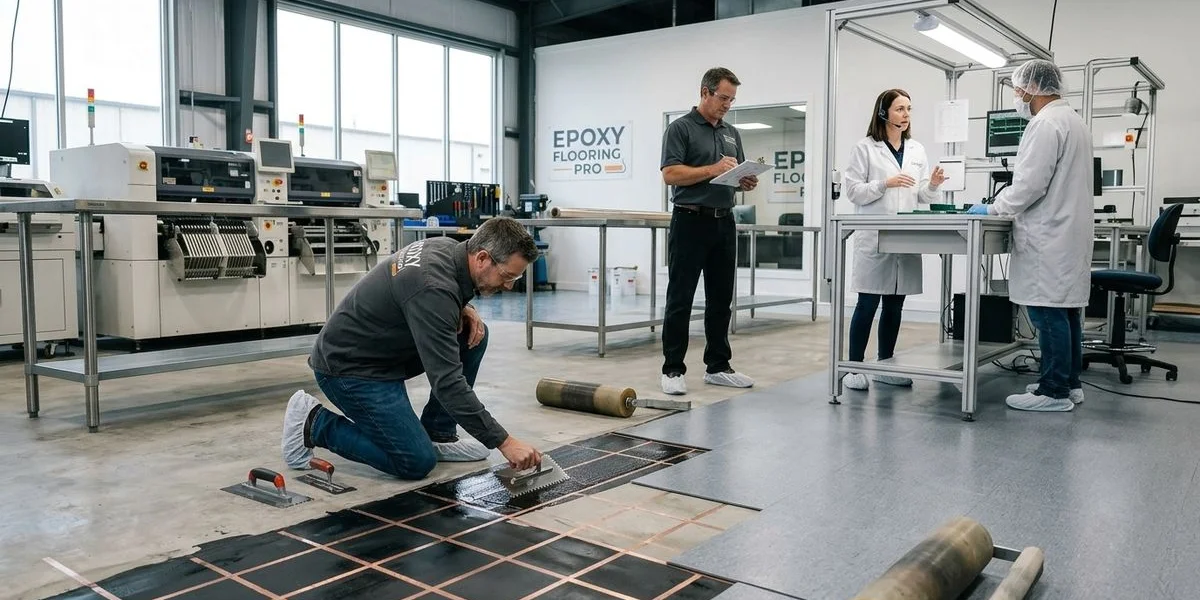
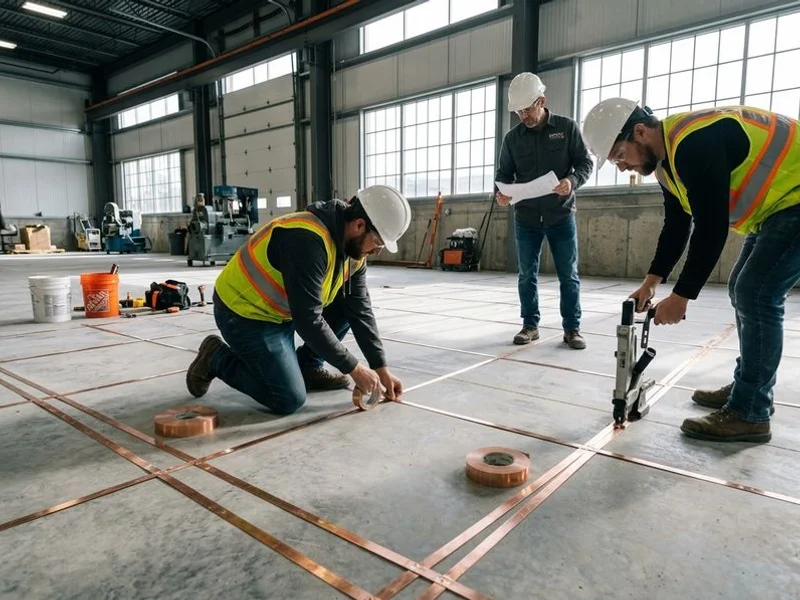
Step 2: Copper Grounding Grid
We install a copper grounding grid directly on the prepared concrete surface. This grid consists of copper strips laid in a pattern that ensures every point on the floor has a continuous electrical path to the building ground system. The grid is connected to designated ground points using copper conductors bonded to building steel or dedicated grounding electrodes.
Step 3: Conductive Primer
A conductive primer is applied over the grounding grid, encapsulating it and creating a continuous conductive layer across the entire floor surface. This primer is the critical layer that establishes electrical continuity from the finished surface through to the grounding system.
Step 4: ESD Topcoat
The final ESD coating is applied over the conductive primer. This layer contains conductive fillers calibrated to achieve the specified resistance range — either static dissipative or conductive. The topcoat also provides the mechanical properties (chemical resistance, abrasion resistance, cleanability) required for the application.
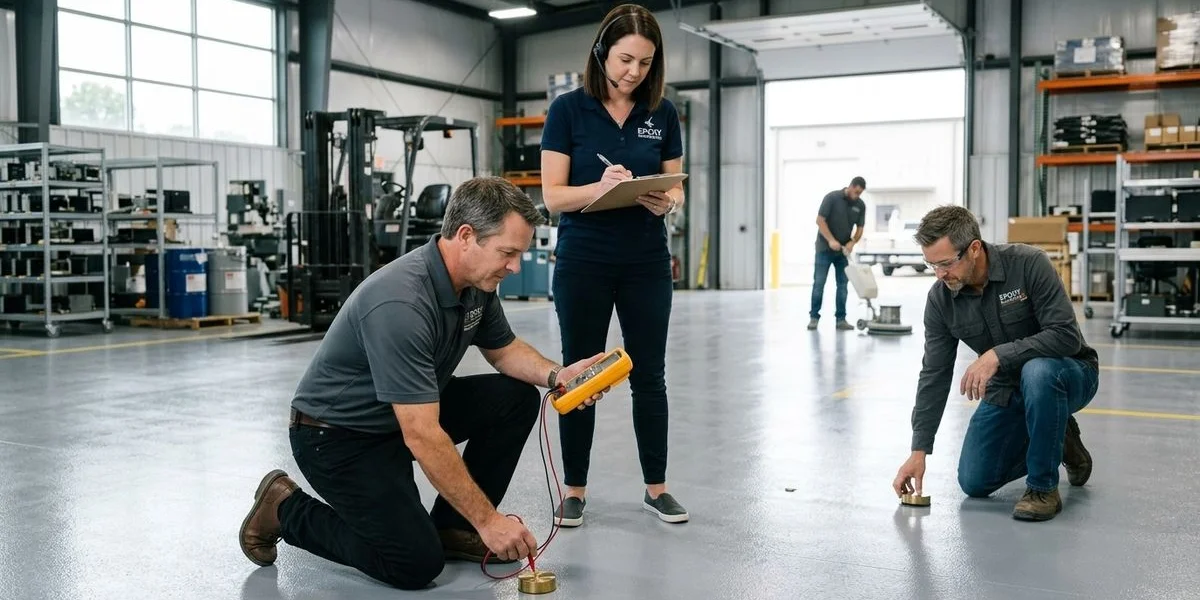
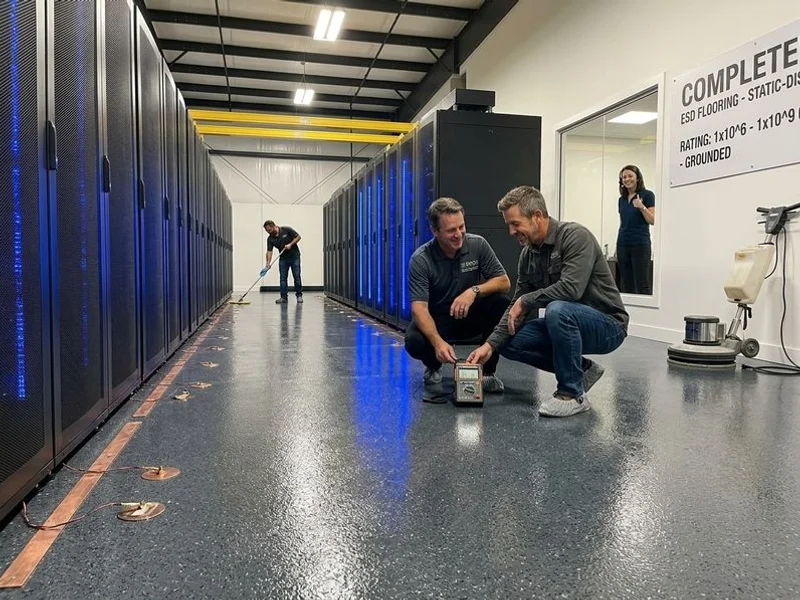
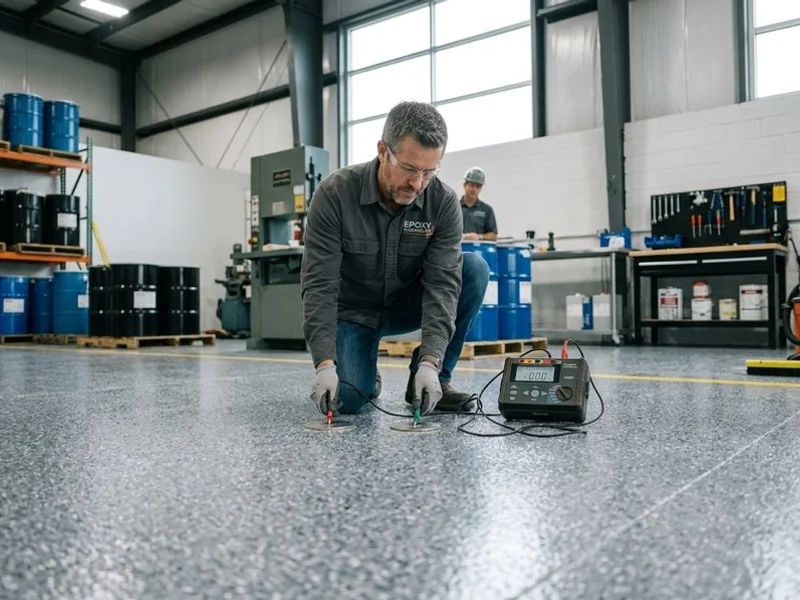
Step 5: Verification Testing
After installation, we perform comprehensive resistance verification testing using calibrated megohmmeters at multiple points across the floor surface. We test point-to-point resistance, point-to-ground resistance, and body voltage generation to verify compliance with ANSI/ESD S20.20 and your facility’s specific requirements. A detailed test report is provided with every installation.
Industries and Applications
Our ESD flooring systems are installed in:
- Electronics manufacturing — PCB assembly, semiconductor fabrication, component testing
- Data centers and server rooms — protecting critical IT infrastructure
- Aerospace and defense — avionics assembly, munitions handling
- Pharmaceutical manufacturing — cleanroom and controlled environments
- Medical device assembly — sensitive component production
- Telecommunications — switching centers and equipment rooms
- Chemical processing — areas with flammable vapor or dust hazards
Ongoing Performance Monitoring
ESD floors must maintain their electrical properties throughout their service life. We provide guidance on maintenance protocols that preserve conductivity and can schedule periodic re-testing to verify continued compliance. Proper maintenance includes using approved cleaning products that do not leave insulative residues on the floor surface.
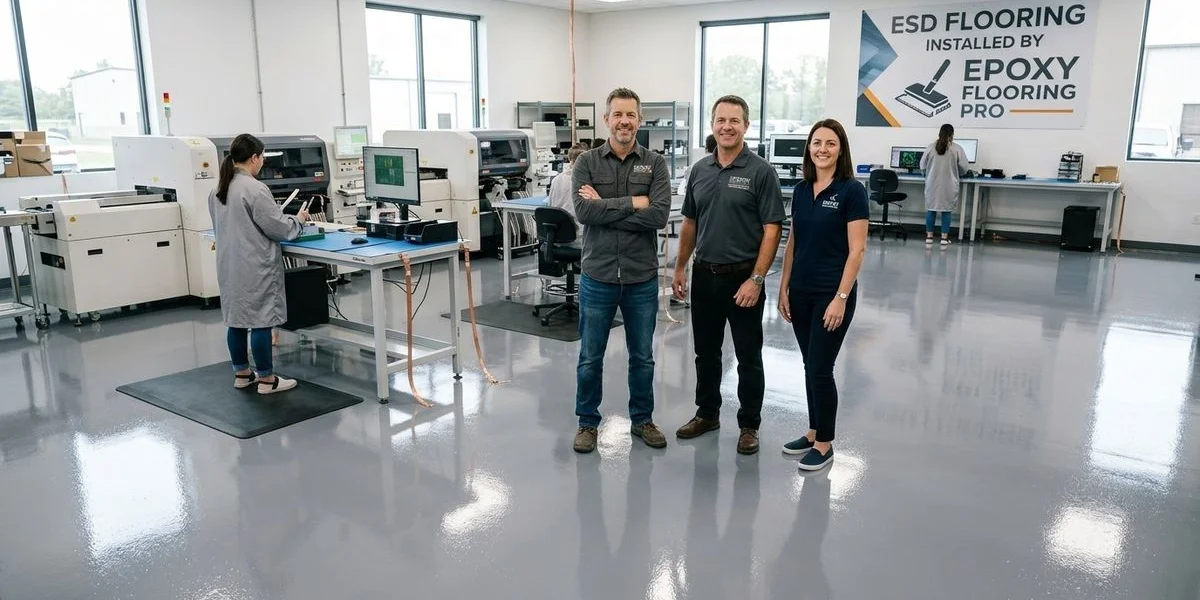
Request an ESD Flooring Consultation
Static control flooring requires specialized knowledge of electrical standards, grounding design, and coating chemistry. Our team has the expertise to specify, install, and verify ESD floor systems that protect your critical operations. Contact us today for a consultation and site assessment.
Project Gallery
Related Services
Concrete Surface Preparation
In-house concrete surface preparation including shot blasting, diamond grinding, and mastic removal — we own all equipment, ensuring zero rental delays.
Epoxy & Urethane Flooring
Industrial-grade epoxy and urethane cement floor systems engineered for heavy traffic, chemical exposure, and continuous operations.
Ready to Get Started?
Contact our team for a free on-site assessment. Available 24/7 with nationwide mobilization.