
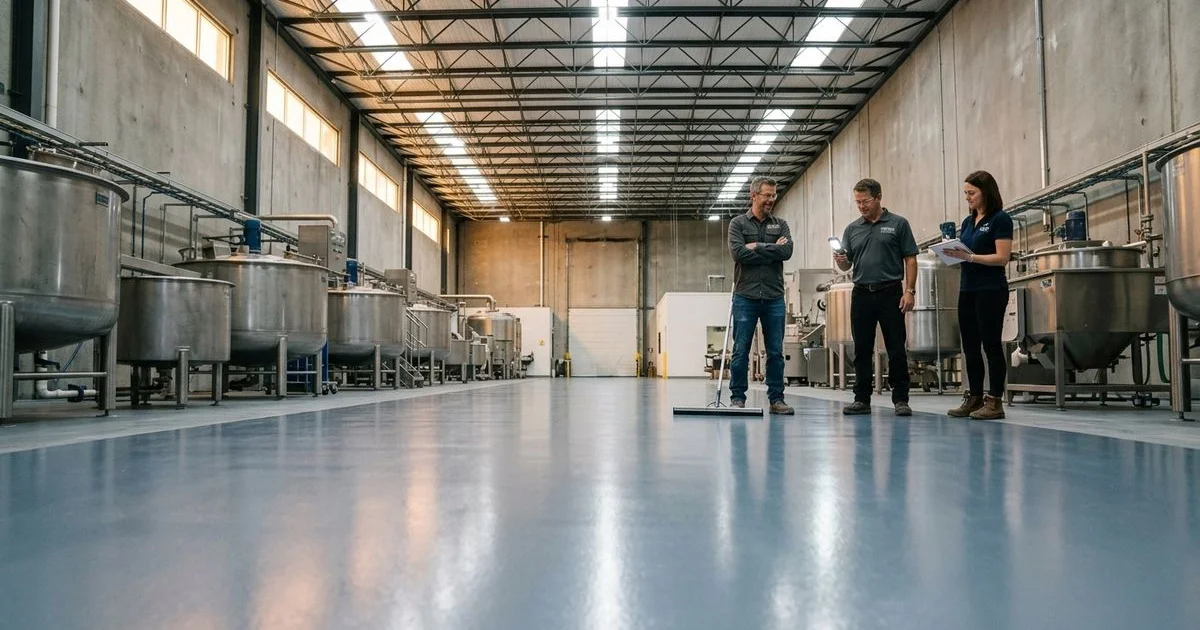
Repair & Protect Chemical Damaged Industrial Concrete Floors
Chemical-resistant floor systems that repair and protect concrete damaged by acids, solvents, caustics, and industrial chemicals.
Get a Free Estimate20+
Years Experience
50+
In-House Installers
5.0 ★
Google Rating
24/7
Operations Support
When Chemicals Attack Your Concrete
Standard concrete has a porous, alkaline structure that offers zero resistance to acids, solvents, and many industrial chemicals. Once chemicals penetrate the surface, they dissolve the calcium hydroxide binder — turning solid concrete into powder. Basic floor coatings fail because they weren’t designed for chemical immersion or repeated splash-and-spill exposure.
If your facility handles acids, caustics, solvents, or aggressive cleaning chemicals, you need a floor system engineered specifically for chemical resistance.
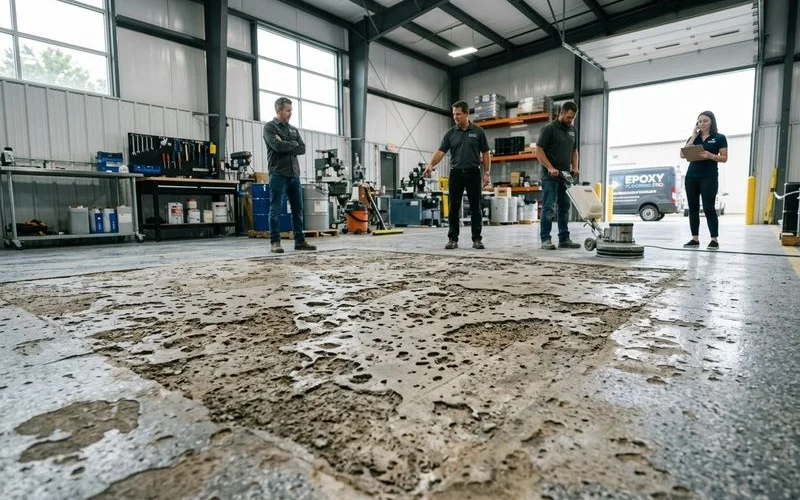
Chemical Resistance Assessment
Every chemical environment is different. Battery acid behaves differently than citric acid. Caustic soda attacks concrete differently than acetone. We start every project with a detailed chemical resistance assessment:
- Chemical inventory — we catalog every chemical your floor contacts, including concentrations and temperatures
- Exposure mapping — we identify splash zones, containment areas, traffic patterns, and drain locations
- Duration analysis — immersion, frequent spills, or occasional contact each require different solutions
- Temperature factors — hot chemicals are far more aggressive than ambient-temperature exposure
This assessment drives our system selection. There is no universal “chemical-resistant floor” — only systems matched to your specific chemical profile.
Systems We Install
Novolac Epoxy Systems
The gold standard for severe acid and solvent environments. Novolac epoxy uses a phenolic-modified resin that resists sulfuric acid, hydrochloric acid, acetic acid, and most organic solvents at concentrations and temperatures that destroy standard epoxy. We install novolac systems in battery rooms, chemical storage areas, and metal finishing facilities.
Urethane Cement Systems
When your floor faces both chemical attack and thermal shock — think hot CIP wash-downs in food processing plants — urethane cement is the right choice. These systems handle temperatures from -40°F to 250°F while resisting acids, fats, and biological waste.
Vinyl Ester Systems
For extreme chemical environments like pulp and paper mills or electroplating facilities, vinyl ester coatings provide the highest level of chemical resistance available. These systems resist oxidizing acids and strong solvents that attack even novolac epoxy.
Epoxy Mortar Systems
When chemical damage has eroded significant concrete depth, we install epoxy mortar systems that rebuild the substrate and provide chemical protection in a single monolithic layer.
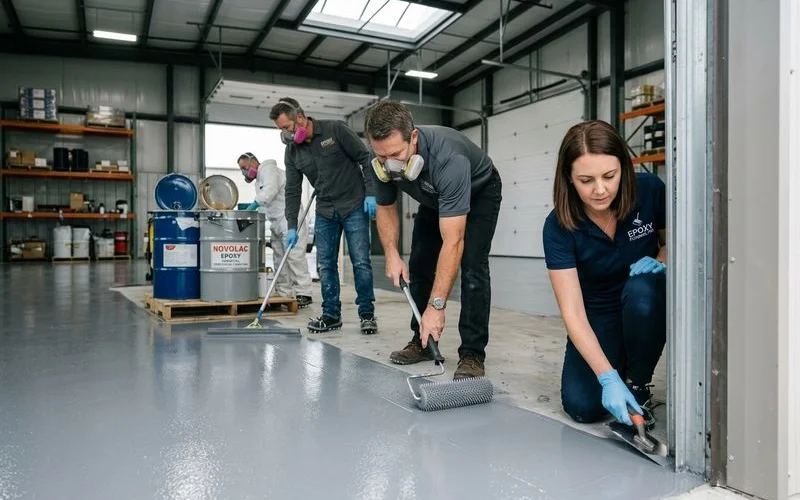
Concrete Repair Before Protection
Chemically damaged concrete must be repaired before any protective coating is applied. Our process includes:
- Removal of contaminated concrete — chemicals absorbed into the substrate will attack coatings from below if not removed
- Substrate rebuilding — epoxy mortar fills erosion pits and restores floor grade
- Surface preparation — diamond grinding creates the mechanical profile for permanent adhesion
- Moisture testing — chemical-damaged slabs often have compromised moisture barriers
Containment Integration
Chemical-resistant floors work best as part of a complete containment system. We integrate floor coatings with containment tank coatings, cove bases, and secondary containment berms to create a seamless barrier that meets EPA and state environmental requirements.
Industries We Serve
Our chemical-resistant floors protect facilities across Michigan and the Midwest:
- Metal finishing and plating — chromic acid, sulfuric acid, alkaline cleaners
- Battery manufacturing and storage — sulfuric acid, potassium hydroxide
- Chemical processing — varied acids, solvents, and caustics
- Food and beverage — organic acids, hot CIP solutions, sanitizers
- Pharmaceutical — solvents, reagents, aggressive cleaning protocols
Stop the Damage
Every day without proper chemical protection means more concrete deterioration and higher repair costs. Contact us for a free chemical resistance assessment and protect your facility’s most critical surface.
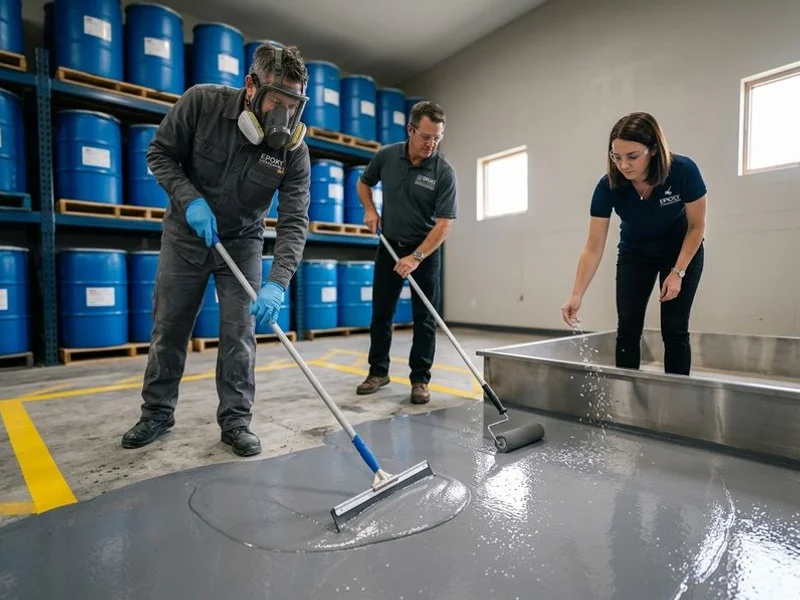
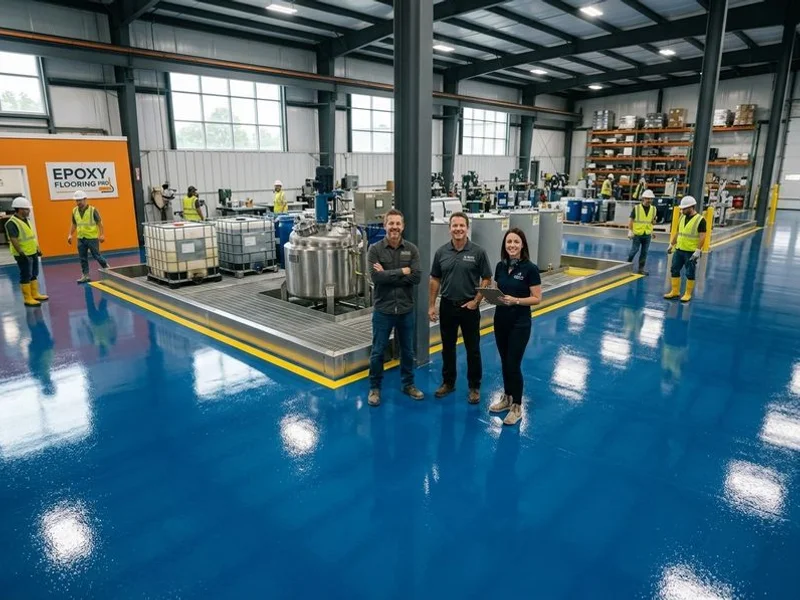
Project Gallery
Related Services
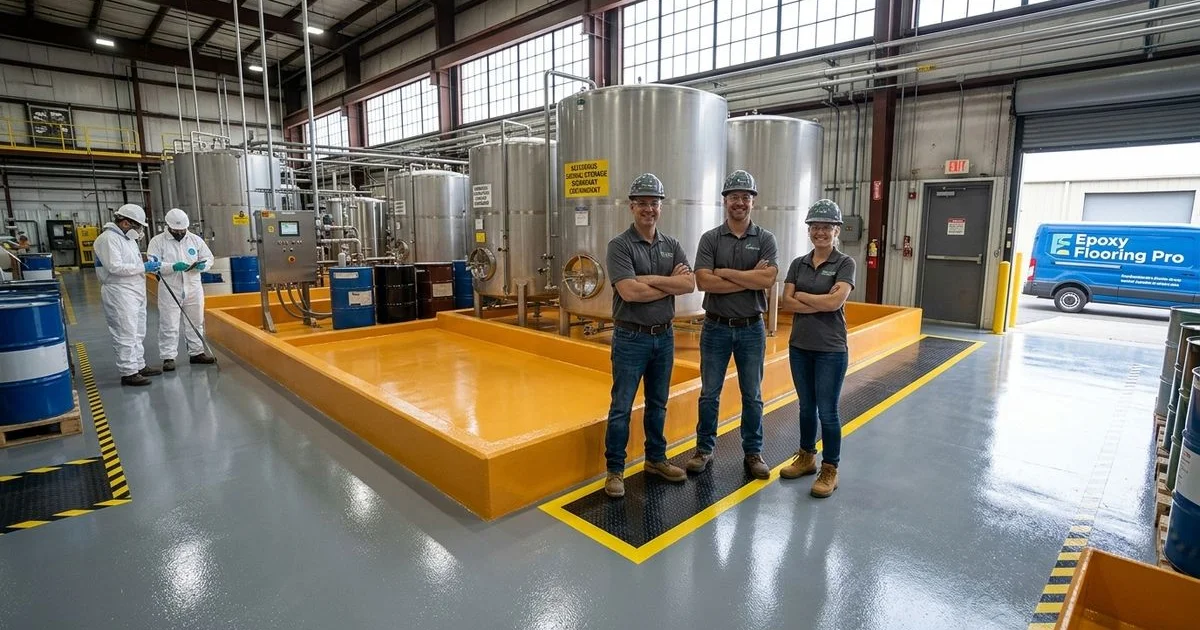
Containment & Tank Coatings
Chemical-resistant secondary containment coatings and tank linings that protect against spills, corrosion, and environmental liability.
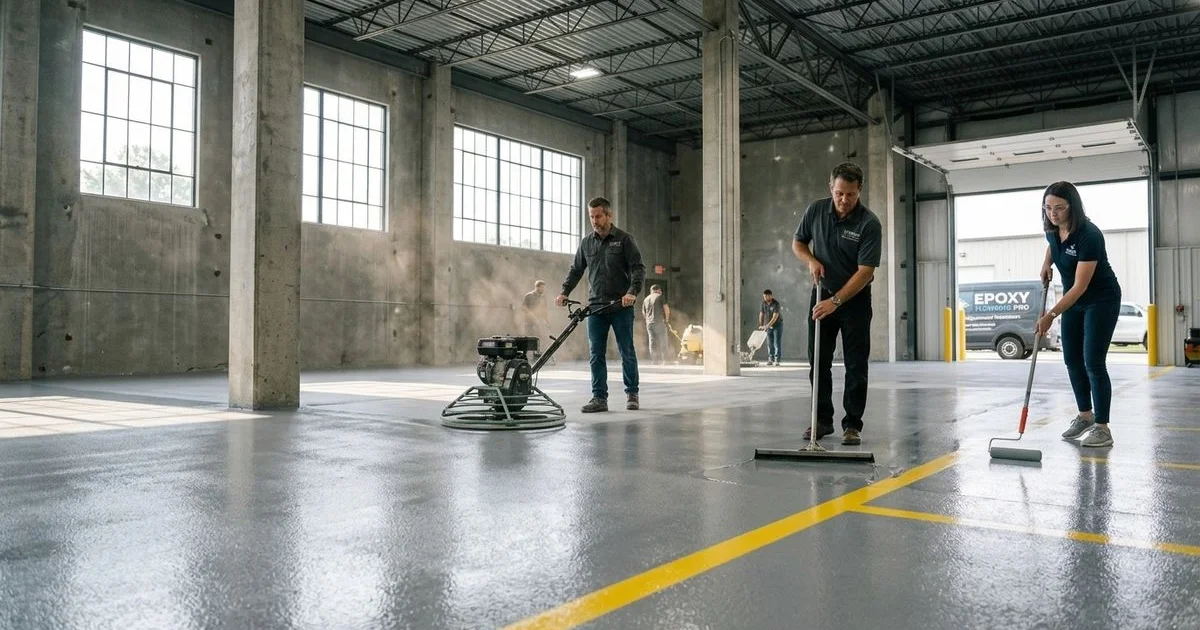
Epoxy & Urethane Flooring
Industrial-grade epoxy and urethane cement floor systems engineered for heavy traffic, chemical exposure, and continuous operations.
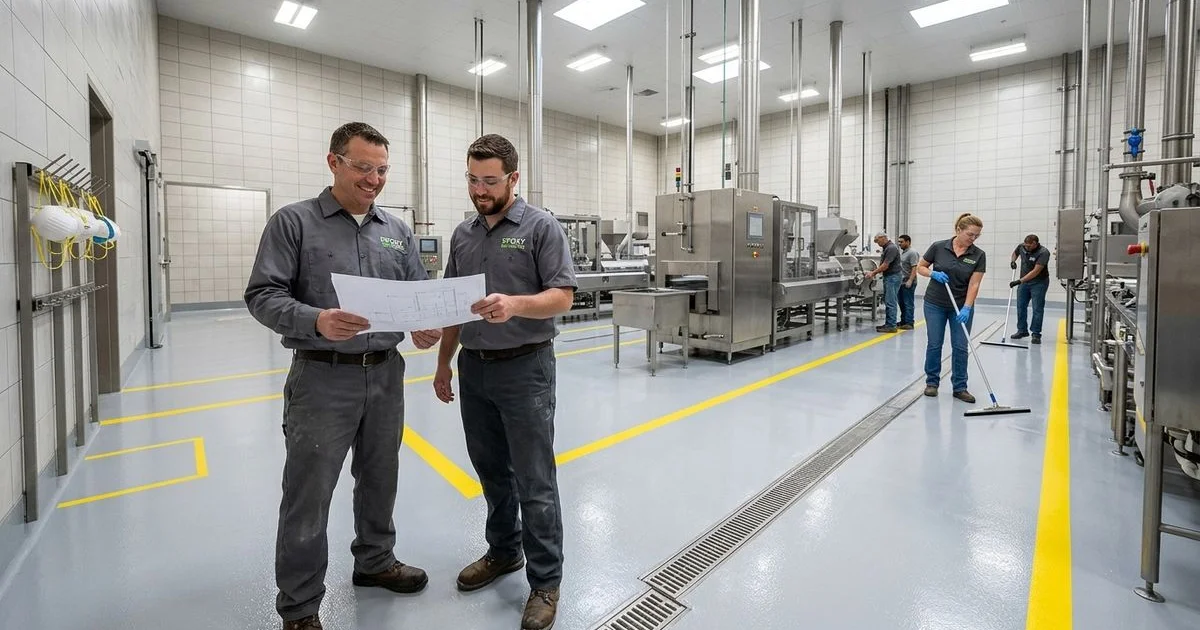
Food & Beverage Flooring
USDA and FDA approved antimicrobial floor systems with HACCP certification for food processing, breweries, and commercial kitchens.
Ready to Get Started?
Contact our team for a free on-site assessment. Available 24/7 with nationwide mobilization.