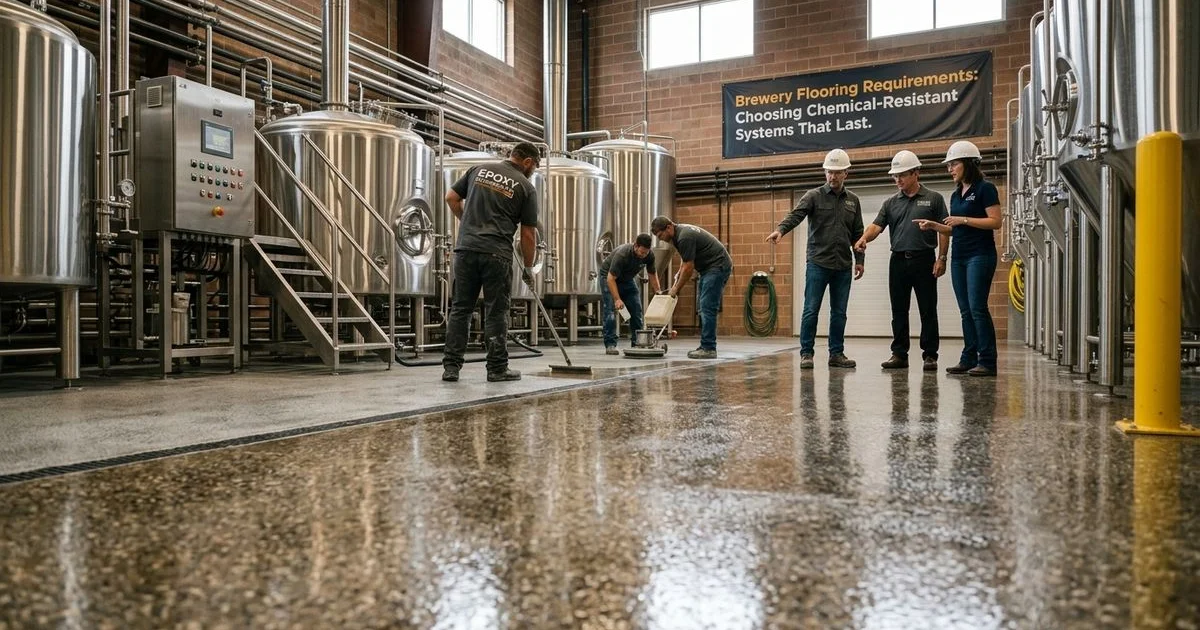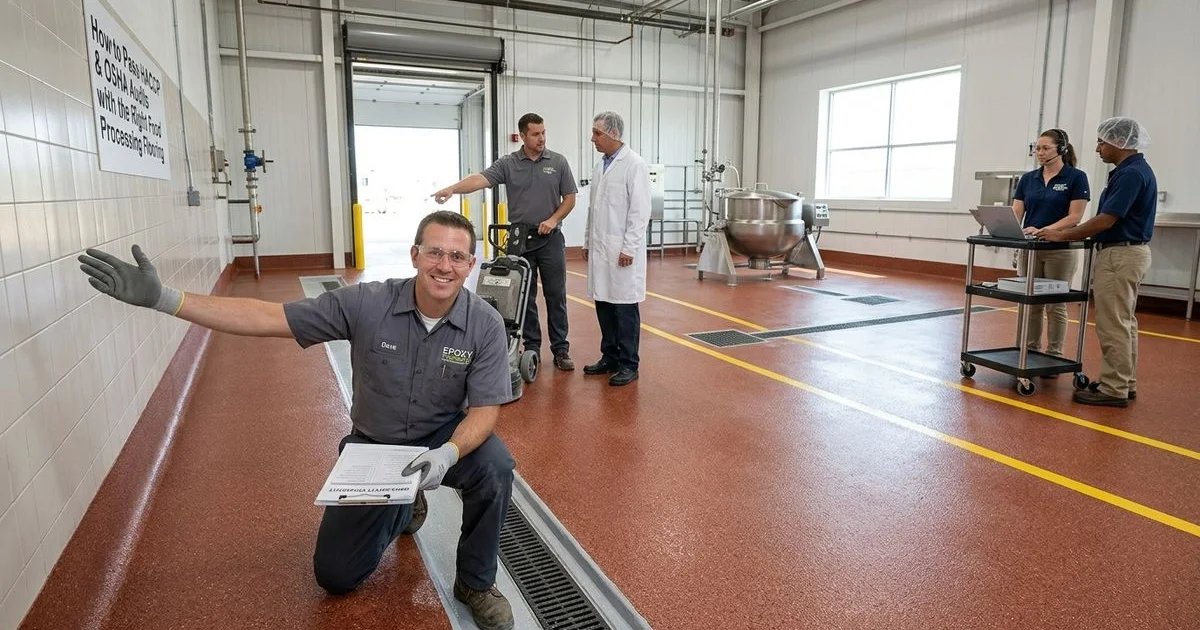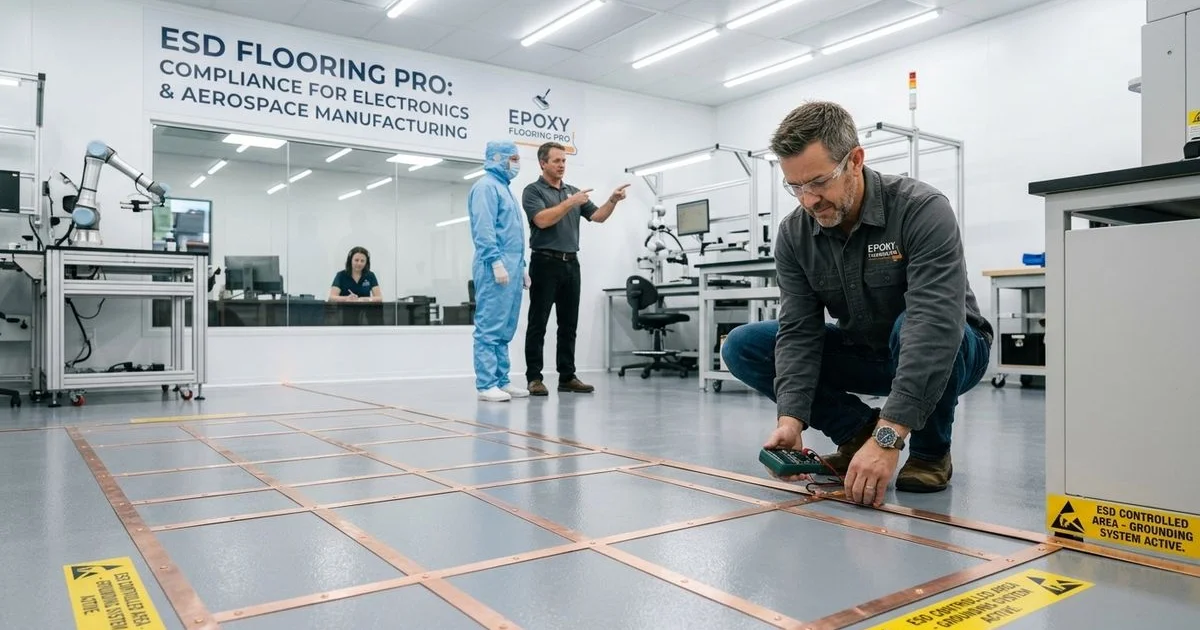
Every facility manager knows the frustration of chasing down mysterious component failures on an assembly line. Those phantom defects are frequently caused by invisible electrostatic discharge events, rather than poor workmanship. At Epoxy Flooring Pro, our team has spent years diagnosing and solving these exact facility challenges.
Understanding the specific ESD Flooring Requirements for Electronics and Aerospace Manufacturing is the first step to eliminating these costly losses. A standard concrete or epoxy surface simply cannot provide the protection modern sensitive components demand. Let us look at the science behind static damage, the different flooring categories available, and exactly how these systems are constructed.
Why Static Electricity Destroys Manufacturing Operations
In standard industrial environments, static electricity is a minor nuisance. In electronics manufacturing, aerospace assembly, and munitions handling, it represents a catastrophic threat. An electrostatic discharge of just 20 volts can permanently damage semiconductor components, corrupt data on storage devices, or ignite volatile atmospheres.
Most humans cannot even feel a static shock until it reaches about 3,000 volts. The human body routinely generates charges between 3,000 and 25,000 volts through normal daily activities.
Common actions create massive static charges in uncontrolled environments:
- Walking across a standard synthetic carpet generates up to 35,000 volts.
- Rolling a standard cart across a plain epoxy floor produces up to 6,000 volts.
- Unwinding a roll of standard packaging tape can generate 15,000 volts.
- Sliding a plastic tote across a workbench creates up to 18,000 volts.
Modern 3nm and 5nm semiconductor architectures are incredibly fragile. A tiny 20-volt discharge easily punches right through their microscopic oxide layers. The EOS/ESD Association estimates that up to 33 percent of all unexplained electronic component failures stem directly from this type of electrostatic damage.
Without a controlled path to dissipate these charges safely, every person in an ESD-sensitive environment becomes a serious liability. Proper flooring provides that controlled dissipation path. It drains static charges from personnel and equipment to the building ground continuously and safely.
Two Categories of ESD Flooring
Static-Dissipative Flooring
Static-dissipative floors have an electrical resistance between 1.0 x 10^6 and 1.0 x 10^9 ohms. This is equivalent to 1 megohm to 1 gigohm. This resistance range drains static charges at a highly controlled rate.
The dissipation is fast enough to prevent ESD events, but slow enough to avoid a rapid discharge that could harm the person standing on the floor. Static-dissipative flooring remains the most commonly specified ESD floor type across the United States.
We frequently install this system in general surface mount technology assembly lines, server rooms, and medical device manufacturing areas. It easily meets the standard requirements for most commercial electronics environments.
Conductive Flooring
Conductive floors feature an electrical resistance between 2.5 x 10^4 and 1.0 x 10^6 ohms. This translates to 25 kilohms to 1 megohm. This lower resistance range drains charges much more rapidly than dissipative floors.
Faster drainage reduces the specific time window during which accumulated charge could cause a catastrophic failure. Conductive flooring is specified strictly in environments with the highest sensitivity requirements.
These extreme environments include:
- Munitions and explosive handling where any stray spark causes detonation.
- Semiconductor fabrication where individual device damage thresholds remain extremely low.
- Operating rooms where specific anesthetic gases create flammable atmospheres per NFPA 99.
- Pharmaceutical processing where static accumulation causes powdered compound dust explosions.
How ESD Floor Systems Are Constructed
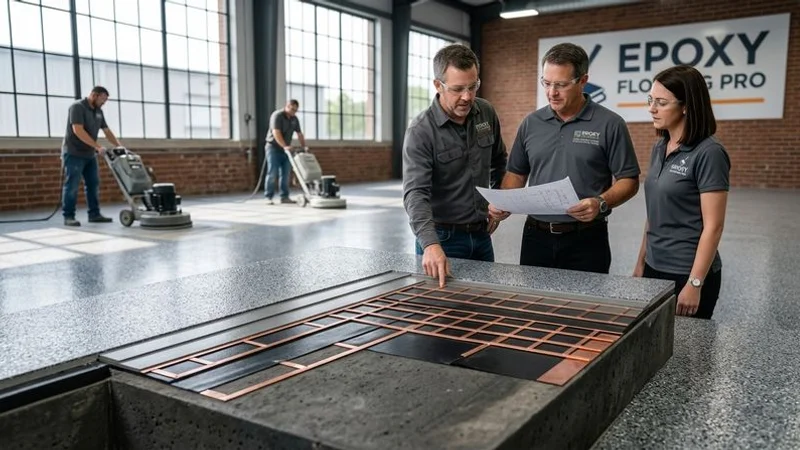
An ESD floor coating system is fundamentally different from a standard epoxy and urethane flooring system in both materials and application methodology. The system requires multiple specialized layers to function correctly.
Layer 1: Conductive Primer
A primer containing specialized conductive carbon or metallic particles is applied directly to the mechanically prepared concrete substrate after thorough concrete surface preparation. This essential primer establishes the initial conductive path from the floor surface down to the grounding system.
Layer 2: Copper Grounding Grid
Installers place copper tape in a strict grid pattern across the entire floor area. We typically lay this out on 10-foot or 6-foot centers in both directions, depending on the specific facility requirements.
The copper grid connects directly to the building’s electrical grounding system at multiple points. This creates highly redundant paths to ground that ensure consistent resistance readings across the entire floor slab.
The copper grid serves as the absolute backbone of the ESD system. Relying solely on conductive coatings without this grid creates severe resistance inconsistencies and dangerous dead zones where charges accumulate rapidly.
Layer 3: Conductive Body Coat
The main ESD coating layer contains carbon fiber, carbon black, or metallic conductive additives. These materials are uniformly dispersed throughout the resin matrix during the mixing process.
Newer formulations utilizing single-wall carbon nanotubes provide excellent conductivity alongside a much more uniform color finish than older carbon black methods. These advanced additives create a continuous conductive network within the coating. This network channels static charges straight from the surface down to the copper grid below.
Layer 4: Topcoat (Optional)
A clear or pigmented topcoat is often applied over the conductive body coat. This final layer significantly enhances chemical resistance and abrasion resistance against heavy forklift traffic.
This topcoat must also contain specific conductive additives to maintain the electrical path right through to the surface. Applying a standard, non-conductive polyurethane topcoat instantly insulates the floor and completely defeats the entire ESD system.
Testing Standards and Compliance
ESD flooring performance must be rigorously verified through standardized testing protocols before a facility can begin operations.
| Standard | Scope | Key Requirement |
|---|---|---|
| ANSI/ESD S20.20 | ESD control programs | Floor must contribute to body voltage below 100V |
| ANSI/ESD STM7.1 | Floor resistance testing | Point-to-point and point-to-ground resistance |
| ANSI/ESD STM97.1 | Floor and footwear system | Combined system below 35 megohms |
| NFPA 99 | Healthcare facilities | Conductive flooring in anesthetizing locations |
| MIL-STD-1686 | Military and defense | ESD program requirements for DoD contractors |
Testing requires a highly specialized megohmmeter utilizing two 5-pound conductive rubber electrodes. Measurements are taken precisely between two points on the floor surface to determine point-to-point resistance.
Technicians also measure between the floor surface and a designated ground point to establish point-to-ground resistance. The surface temperature and relative humidity must be formally recorded during the test, as extremely dry indoor air naturally increases electrical resistance.
Industry Applications
Electronics Manufacturing
Printed circuit board assembly lines and semiconductor packaging facilities require proper flooring as a foundational element of their quality control programs. Implementing facility-wide grounding drastically improves first-pass yield rates on sensitive assembly lines.
The floor and footwear systems work together constantly. This combination keeps human body voltage generation completely below the 100-volt damage threshold during every single step of the manufacturing process.
Aerospace and Defense
Avionics assembly and satellite component integration demand the highest levels of static control. These specialized environments handle ESD-sensitive devices governed directly by MIL-STD-1686 and related military specifications.
Our aerospace projects frequently require fully conductive flooring rather than dissipative options. This stringent requirement stems from the extreme sensitivity of the components and the absolute mission-critical nature of the final defense products. Standard NASA-STD-8739.6 also heavily regulates electrostatic discharge control within spacecraft assembly areas.
Data Centers
Server rooms and network operations centers house densely packed electronic equipment operating in heavily climate-controlled environments. Current ASHRAE TC 9.9 guidelines for data centers often push humidity levels down to save on cooling costs.
This dry air, combined with constant personnel movement, creates the perfect storm for massive static generation. Installing proper dissipative flooring throughout these server farms prevents catastrophic equipment damage and sudden data corruption from uncontrolled arcs.
Pharmaceutical Clean Rooms
Facilities handling powdered active pharmaceutical ingredients face severe dual risks. They must prevent static-driven dust explosions while stopping contamination from electrostatically attracted micro-particles.
The current FDA Current Good Manufacturing Practice regulations require extremely strict facility contamination control. Conductive flooring addresses both compliance concerns by eliminating the charge accumulation that attracts airborne dust and completely removing the ignition risk from a spark discharge.
Maintenance and Ongoing Verification
High-performance flooring requires highly specific maintenance practices to preserve its critical electrical properties throughout its service life.
- Use only certified cleaning products: Standard commercial floor waxes containing carnauba or synthetic polymers leave thick insulative residue films. This instantly blocks the conductive path. Facility managers must use neutral-pH cleaners designed specifically for static control floors.
- Test resistance regularly: Implement strict monthly testing protocols in critical manufacturing zones and quarterly testing in general assembly areas. Always use calibrated instruments and maintain documented procedures.
- Repair damage promptly: Any deep physical scratch or gouge in the coating surface easily creates a localized insulative zone. Prompt repair using specialized conductive patching material instantly restores the critical electrical path.
- Maintain testing records: Comprehensive, timestamped records of all resistance testing are mandatory for third-party compliance audits. These logs clearly demonstrate the ongoing effectiveness of your facility’s static control program.
The Complete ESD Control System
A high-quality floor is just one crucial component of a comprehensive electrostatic discharge control program. The complete standard defined by ANSI/ESD S20.20 includes much more.
A fully compliant system requires the correct flooring, dissipative footwear, strict wrist strap usage at workstations, properly grounded work surfaces, and facility humidity control maintained between 40 and 60 percent. The physical floor and the employee’s footwear form an integrated system that must pass combined resistance testing.
We specify ESD flooring systems that are heavily verified to pass system testing with standard static-control footwear. This ensures your new floor integrates perfectly with the rest of your daily operational protocols.
Properly assessing your unique facility needs requires expert analysis. Contact us for an evaluation tailored specifically to your component sensitivity levels and regulatory compliance goals.
Meeting the exact ESD Flooring Requirements for Electronics and Aerospace Manufacturing protects your vital product yields and ensures total operational safety. Let our team provide the perfect foundation for your critical environment today.
Need Help With Your Floor Coating Project?
Our project managers provide free on-site assessments tailored to your facility.
Get a Free Estimate