We see standard epoxy floor coatings look pristine on day one. They are seamless, non-porous, and resistant to most industrial cleaning chemicals. Our experience shows facility managers often assume this passive cleanability is enough, bringing us to the subject of antimicrobial floor coatings: when your facility needs more than standard epoxy.
That assumption falls apart between scheduled washdowns.
We have built Epoxy Flooring Pro to deliver high-performance industrial and commercial flooring solutions with a focus on unmatched quality and customer success across the US. Invisible threats multiply rapidly on damp surfaces, requiring floors that actively suppress microbial growth. Our team will break down the latest 2026 data, analyze specific biocidal technologies, and outline exact costs so you can specify the right system with confidence.
How Antimicrobial Floor Coatings Work
Antimicrobial floor coatings incorporate biocidal agents directly into the resin matrix during the mixing phase. These agents are distributed uniformly throughout the entire coating thickness, not just applied as a topical surface sealer. This uniform distribution ensures the floor maintains its protective properties even as the surface experiences normal wear from heavy forklift traffic.
Our installation crews verify the proper suspension of these agents to meet specific US Environmental Protection Agency (EPA) registration requirements. The continuous exposure of fresh biocides provides round-the-clock suppression of dangerous pathogens.
Silver Ion Technology
The most widely used and scientifically validated antimicrobial technology for US floor coatings is silver ion (Ag+) technology. Silver ions interfere directly with bacterial cellular respiration and DNA replication, effectively killing bacteria that contact the treated surface.
Our preferred systems utilize this proven technology to meet strict facility standards. Silver ion antimicrobial additives offer several distinct advantages:
- EPA-registered as highly effective antimicrobial agents.
- Non-leaching when properly incorporated into the resin matrix, protecting local groundwater.
- Effective against MRSA, E. coli, Salmonella, Listeria, and most gram-positive and gram-negative bacteria.
- Long-lasting with efficacy maintained for the full 10 to 20-year service life of the commercial epoxy coating.
The antimicrobial effect is continuous and does not require UV light to activate. Fresh silver ions are exposed from within the coating as the surface wears, maintaining consistent performance throughout the floor’s service life. ISO 22196 testing consistently verifies this active suppression on non-porous plastics and resins.
Organic Antimicrobial Agents
Some coating systems use organic antimicrobial compounds such as zinc pyrithione or OBPA (10,10-oxybisphenoxyarsine) as alternatives to silver ion technology. These agents are effective at controlling specific fungi and yeasts, but they present unique challenges in heavy industrial settings.
We find that organic agents can be depleted by aggressive cleaning chemicals over time. Harsh washdowns using 20 percent acetic acid or concentrated bleach will slowly break down these organic compounds, leaving the floor vulnerable.
For US facilities with the most demanding antimicrobial requirements, silver ion technology remains the preferred choice. The inorganic nature of silver provides broader spectrum efficacy and superior durability against harsh industrial detergents.
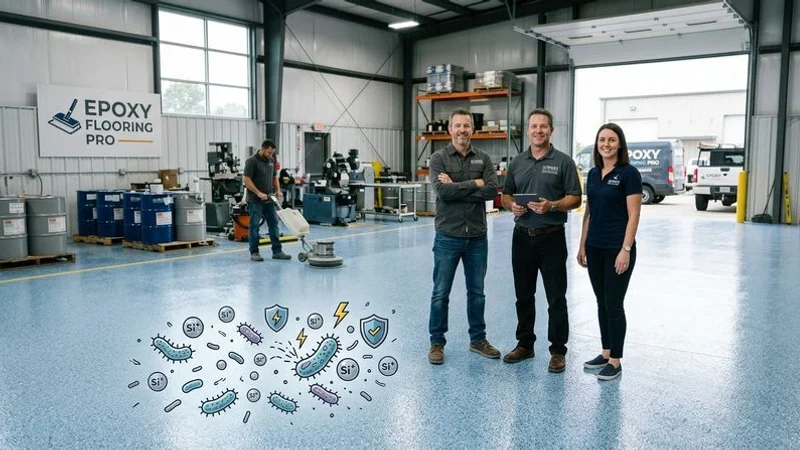
Facilities That Benefit from Antimicrobial Flooring
Different industries face unique regulatory and sanitation challenges. A proactive approach to floor safety reduces product recall risks and protects human health.
Healthcare and Medical Facilities
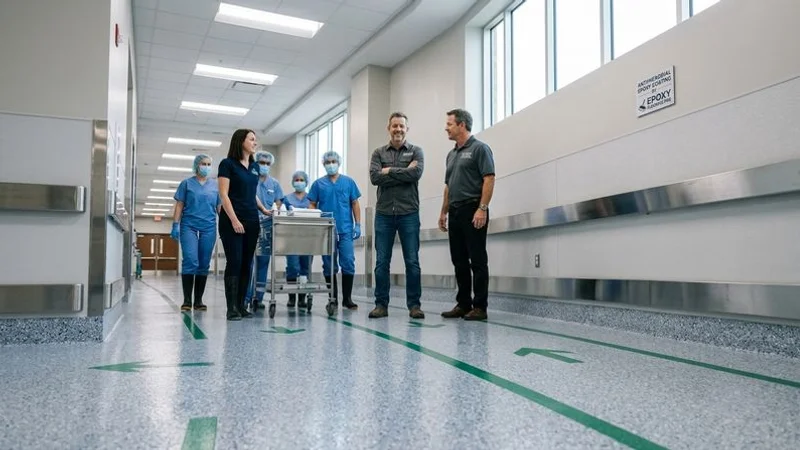
Hospital corridors, patient rooms, surgical suites, and emergency departments all benefit heavily from antimicrobial floor coatings. The US Centers for Disease Control and Prevention (CDC) reports that approximately 1 in 31 hospital patients has a healthcare-associated infection (HAI) on any given day.
Our hospital clients rely on these specialized floors to provide a supplementary barrier against pathogen transmission between cleaning cycles. Key high-risk areas include:
- Operating rooms: Extreme patient vulnerability demands passive infection control.
- Intensive care units: Require systems built directly into the infrastructure.
- Emergency departments: High-traffic zones are difficult to keep sanitized using manual labor alone.
Pharmaceutical Manufacturing
GMP-regulated pharmaceutical facilities require the absolute highest level of environmental contamination control. The US Food and Drug Administration (FDA) enforces strict Current Good Manufacturing Practice (cGMP) guidelines for drug production spaces.
We build these floors to directly support compliance with 21 C.F.R. Section 211.110, which mandates rigorous in-process controls to prevent contamination. Antimicrobial floor coatings supplement your primary protocols:
- Facility air handling systems
- Strict personnel gowning procedures
- Scheduled chemical cleaning cycles
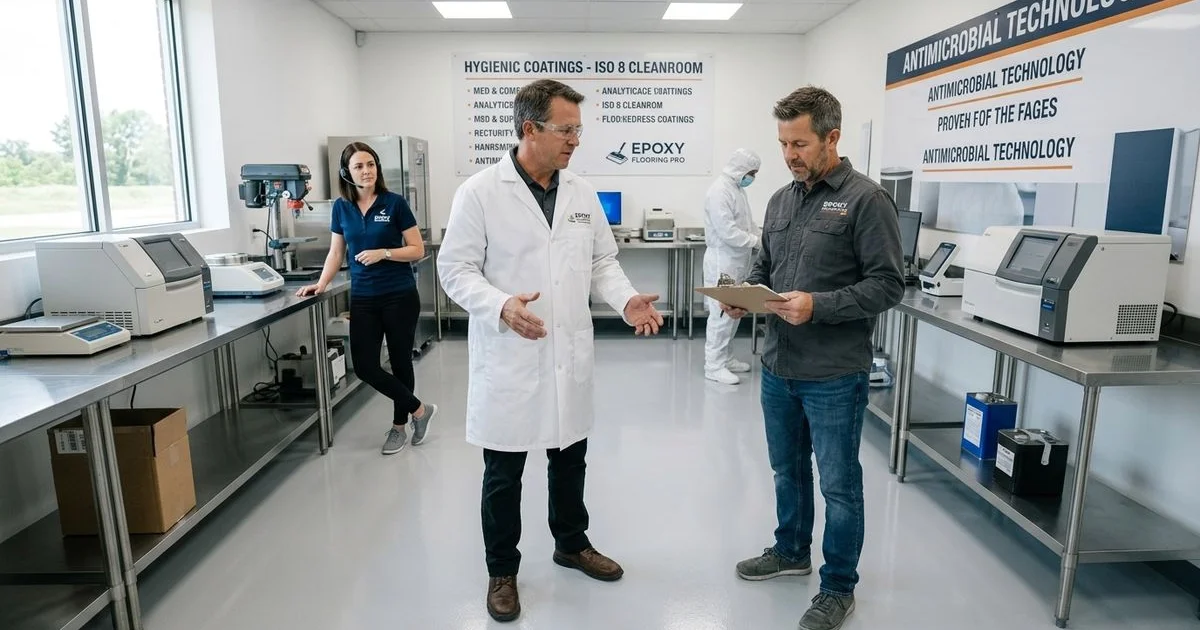
Cleanroom environments benefit immensely from antimicrobial coatings because any microbial presence threatens product sterility. ISO-classified spaces must maintain smooth, impervious surfaces that actively resist biological buildup.
Food Processing and Preparation
Food processing facilities must prevent microbial contamination of products throughout the entire production chain. The FDA regulates indirect food additives under 21 CFR 175.300, requiring floor coatings to be safe and easily cleanable.
Our installations in meat processing and dairy plants provide continuous protection in the critical intervals between high-pressure sanitation cycles. Food acids and heavy moisture create the perfect breeding ground for Listeria and Salmonella.
Areas with the highest risk and greatest benefit from antimicrobial flooring include:
- Raw product receiving and initial sorting areas.
- Ready-to-eat product zones where post-processing contamination is highly dangerous.
- Cold storage environments where rapid condensation creates moisture films that support bacterial growth.
- High-temperature washdown zones requiring thermal shock-resistant epoxy and urethane flooring systems.
Research and Laboratory Facilities
BSL-2 and BSL-3 laboratories, animal research facilities, and clinical testing laboratories handle volatile biological materials that create extreme contamination risks. Technicians working with these agents rely on every surface to aid in containment.
We install chemical-resistant antimicrobial floors to complement the strict decontamination protocols required in these US testing environments. The seamless coved edges prevent contaminated solvents and spilled cultures from seeping under the walls.
Performance Expectations and Limitations
Setting realistic expectations prevents compliance failures and maintenance issues down the road. Facility managers must understand the exact capabilities of these specialized resin systems.
What Antimicrobial Coatings Can Do
The scientific data supporting biocidal resins is highly encouraging. Verified laboratory testing outlines specific performance benchmarks for industrial applications.
- Reduce bacterial populations on the floor surface by 99.9 percent within 24 hours of contact.
- Maintain continuous antimicrobial activity between scheduled cleaning and sanitation cycles.
- Supplement regular cleaning protocols without interfering with standard US industrial detergents.
- Provide consistent performance for the full 10 to 20-year coating service life.
What Antimicrobial Coatings Cannot Do
These advanced systems are powerful, but they are not magical force fields. You must pair them with proper operational management.
We always remind facility directors that antimicrobial agents do not replace dedicated janitorial staff. The technology suppress microbial growth, but it does not remove heavy soil, organic matter, or sticky chemical residues.
- Replace cleaning: The floors are not self-cleaning and require routine washdowns.
- Prevent all contamination: The antimicrobial effect requires physical contact time to work, so organisms immediately transferred from a dropped tool to a table will not be affected.
- Address viral contamination: Most antimicrobial coatings are tested specifically against bacteria and fungi, meaning antiviral claims require separate validation and are rarely supported by standard epoxy data.
Cost Premium for Antimicrobial Systems
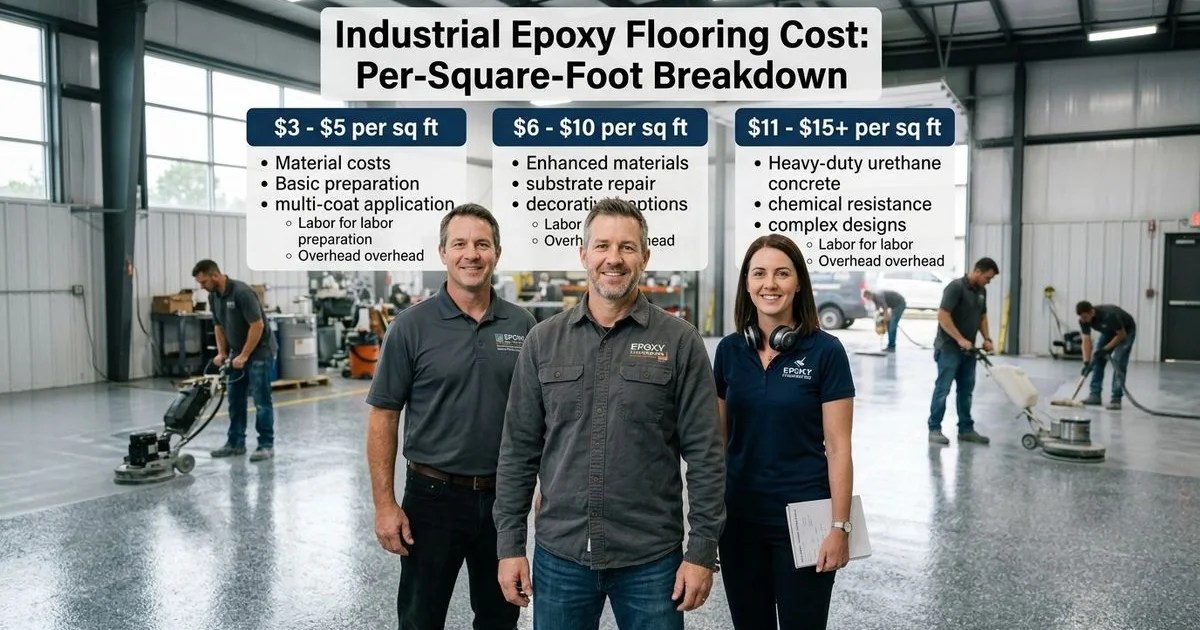
Budgeting for a major facility upgrade requires accurate, up-to-date pricing data. As of 2026, standard professional epoxy flooring in the US averages between $7.50 and $12.00 per square foot.
Our estimators factor in the specific antimicrobial additives, which typically add an extra $0.50 to $1.50 per square foot to the final installed cost. This premium varies based on the chosen biocidal technology, the required dosage level, and the condition of your existing concrete slab. Proper concrete surface preparation is essential before any antimicrobial system can be applied.
| Flooring System Type | Average 2026 Base Cost (Per Sq. Ft.) | Antimicrobial Premium | Total Estimated Cost |
|---|---|---|---|
| Standard 100% Solid Epoxy | $7.50 - $9.00 | + $0.50 - $1.00 | $8.00 - $10.00 |
| Urethane Cement (Thermal Shock) | $9.00 - $12.00 | + $1.00 - $1.50 | $10.00 - $13.50 |
| Decorative Quartz Broadcast | $8.00 - $11.00 | + $0.75 - $1.25 | $8.75 - $12.25 |
For a 20,000-square-foot manufacturing space, the antimicrobial upgrade represents an additional investment of $10,000 to $30,000. When you evaluate this cost against a potential multi-million dollar product recall or a devastating healthcare-associated infection, the premium is exceptionally modest.
Compliance Considerations
Facilities subject to HACCP audits, USDA meat inspection, or Joint Commission healthcare accreditation can significantly strengthen their compliance position with antimicrobial flooring. Auditors look for proactive risk mitigation strategies during their facility walkthroughs.
We highly recommend keeping a dedicated compliance binder on-site that includes all flooring documentation. The inspector will evaluate your complete sanitation system, and the physical floor is a major, highly visible component.
Your facility records should include the following core items to prove your commitment to maintaining a safe, regulated environment:
- The antimicrobial agent’s EPA registration number.
- Independent ISO 22196 efficacy testing results.
- Specific chemical resistance data for your facility’s exact detergents.
Specifying Antimicrobial Floor Coatings
Selecting the correct contractor is just as critical as choosing the right resin formula. You need a team that understands US industrial regulations and stands behind their work.
The wrong application method will void your warranty and leave your concrete unprotected.
We advise clients to demand comprehensive documentation before signing any installation contract. Require the following items from your local coating contractor:
- EPA registration number for the specific antimicrobial agent mixed into the resin.
- Independent laboratory testing demonstrating efficacy against the exact target organisms relevant to your daily operations.
- Compliance documentation for any regulatory frameworks applicable to your specific industry, such as FDA, USDA, or cGMP guidelines.
- Warranty provisions that specifically cover both physical delamination and long-term antimicrobial performance.
Our team specifies and installs seamless systems to solve this exact challenge regarding antimicrobial floor coatings: when your facility needs more than standard epoxy. Explore our food and beverage flooring solutions or contact us to discuss the specific options appropriate for your facility requirements.
Need Help With Your Floor Coating Project?
Our project managers provide free on-site assessments tailored to your facility.
Get a Free Estimate